About National Student Auditions (NSA)
Mission | The Student and Teacher | New Repertoire | Regulations | Genres | Cost to Participate | Audition vs Competition | People to Know | Scope and Scale | NSA History
Need a Big-Picture Overview: 
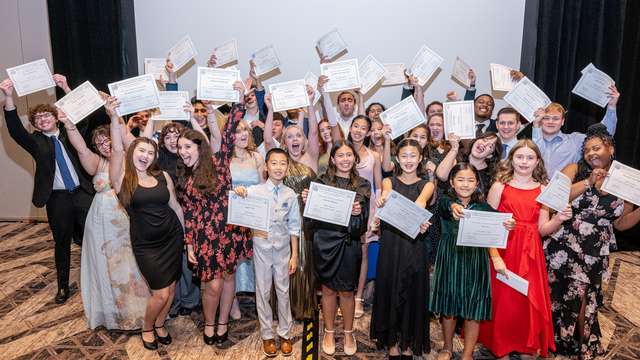
NATS Student Auditions provide singers with opportunities to perform, receive constructive feedback, and grow through a structured audition experience supported by NATS teachers and adjudicators.
NATS Student Auditions are offered through NATS Chapters and Regions across the country, with many auditions providing a pathway for eligible singers to advance through Region level auditions to the National Preliminary Round and, ultimately, the in-person National Semifinals and Finals.
Singers participate in categories based on factors such as age, level of study, and style of music, with opportunities spanning classical, musical theatre, commercial music, and other areas of vocal performance. The audition season runs for 10 months starting in September and culminating with the in-person National Student Auditions Semifinals and Finals in June/July.
At every level, the goal is larger than competition. The National Student Auditions are designed to encourage artistic growth, celebrate developing singers, provide meaningful feedback from experienced voice professionals, and give students the opportunity to share their work as part of the broader NATS community.
Mission
"The idea of constructive criticism along with encouragement is at the heart of our student adjudications. Perhaps one of the greatest ties that binds us together as NATS members is the care we have for the students of our colleagues, as demonstrated at our student auditions." Former NATS President Roy Delp
The NATS Student Auditions are designed to:
- Inspire and encourage singers and teachers to continue their dedication to, and growth in, the art of singing
- Embrace all genres of vocal music as art worthy to be studied, respected, and appreciated
- Create a collegial, supportive, and inclusive atmosphere that encourages excellent artistic singing
- Provide constructive, written feedback from a panel of experienced and impartial adjudicators
- Recognize and honor outstanding performances
- Create the NSA as a structure that continues to evolve and improve with each audition cycle
The Student and The Teacher
Teachers play a central role by selecting repertoire that builds progressively from one level of achievement to the next. For the student, each selection serves as a stepping stone, reinforcing established skills while introducing new artistic and technical concepts. Over time, these carefully sequenced experiences develop complete singers who communicate with technical security, musical understanding, stylistic versatility, expressive artistry, and professional confidence.
The National Student Auditions recognize that artistic excellence is achieved through consistent growth rather than a single performance highlighting a few minutes of the singer’s semester. Success is not simply measured in the Auditions by rankings or awards, but by each singer’s work with their teacher as they continue development as an artist, musician, and communicator. Participation in NSA also gives each student the valuable opportunity to receive feedback from experienced NATS adjudicators beyond their regular studio, offering diverse professional perspectives on their growth while maintaining the continuity of their work with their own voice teacher. Every audition provides an opportunity to celebrate progress, identify the next stage of growth, and advance the educational mission of NATS.
New Repertoire
One of the primary educational goals of the National Student Auditions (NSA) is building singers' competence in varied musical styles through the study and performance of new solo repertoire. Each audition cycle provides an opportunity for singers to expand their musical knowledge, develop new technical and artistic skills, and discover works that contribute to their long-term growth as complete musicians. To support this educational mission, repertoire performed in a previous National Student Auditions cycle should not be reused during the next annual chapter and region cycle.
While revisiting repertoire remains an important part of vocal study and performance, the National Student Auditions are intended to inspire continued exploration and learning through the preparation of new literature. By encouraging fresh repertoire each cycle, NATS helps singers broaden their artistry, deepen their musicianship, and build a more diverse and meaningful repertoire throughout their studies.
Regulations
Our National Student Auditions (NSA) Regulations are an outgrowth of the NATS Mission and are designed to create a shared framework for NATS auditions at every level. The regulations provide consistent expectations for registration, categories, and repertoire, helping teachers and singers feel at home at NATS auditions wherever they participate. By establishing a common foundation, the NSA creates a clear and equitable framework for comparison and adjudication while leaving room for each singer’s individual artistry, voice, and musical identity to shine. These regulations draw on research and experience from NATS auditions across all 15 regions and at the chapter level, with the goal of creating a cohesive experience for students, teachers, and adjudicators throughout the NATS community.
The regulations also serve to:
- Allow for a comparison of scoring data from one end of the NSA to the other.
- Establish a shared vocabulary and definitions for vocal music repertoire as it is presented in our auditions.
- Put in place common systems for language and scoring so that a teacher or singer, whether acting as adjudicator or singer, can move between chapters and regions with a clear grasp of what a NATS audition entails.
- Offer categories that are reflective of the diversity, inclusion and cultures within our growing membership and their particular areas of expertise.
- And finally, to give the singers of our members a chance to hone the necessary skills in a setting that is safe and supportive, rather than one of a talent competition.
Genres
- Classical Music (CL), Musical Theatre (MT), Commercial Music (CM) - every year
- American Negro Spirituals (AS) - even numbered years
- Hall Johnson Spirituals (HJ) - odd numbered years
Cost to Participate
Learn more about the costs to participate here.
Auditions or a Competition? Isn’t this a competition?
Using the Oxford definitions as a starting point, there is an important conceptual distinction that supports the philosophy of the NATS Student Auditions. Oxford defines an audition as “a short performance given by an actor, singer, etc., so that somebody can decide whether they are suitable to act in a play, sing in a concert, etc.” In other words, an audition is fundamentally an adjudication of readiness or suitability. By contrast, Oxford defines a competition as “an event in which people compete with each other to find out who is the best at something.” The defining purpose of a competition is ranking participants against one another to determine winners.
Applied to the National Student Auditions (NSA), these definitions highlight a distinction that is often misunderstood:
| NSA Auditions | NATS Competitions |
| Evaluates the individual singer against the standards established by the NATS rubrics | Compares singers against one another |
| Focuses on artistic development and growth | Focuses on determining rankings and winner |
| Multiple singers may demonstrate the same level of achievement | Rankings are necessarily limited |
| Recognition is earned by meeting objective standards | Awards are earned by outperforming other competitors |
The National Student Auditions (NSA) are an educational audition process that includes competitive elements. Singers are first evaluated against published standards of vocal and artistic achievement. Those who meet established benchmarks may earn recognition, such as Semifinalist, based on merit rather than quota. Competitive ranking is then used only to determine advancement to the final round and the awarding of final placements. The National Student Auditions (NSA) are rooted in the educational mission of NATS. They provide a structured environment in which singers learn to prepare, perform, receive professional feedback, and refine their artistry. While the auditions include competitive recognition, their primary purpose is to promote excellence in the teaching and learning of singing.
Who's Who
 |
 |
 |
 |
NATS Student Auditions and the National Student Auditions (NSA) are powered by the expertise and dedication of many NATS member volunteers. The program is led by the NATS Vice President of Auditions, an elected member of the NATS Board of Directors, working in partnership with a network of volunteer Audition Chairs at the Chapter and Region levels and coordinators, committee members, and advisory panels at the National level, with support from NATS staff.
Together, these leaders help shape audition policies, repertoire and category requirements, adjudication practices, and the continued growth of NSA at the chapter, region, and national levels. Your first stop for any questions will be your local Auditions Chair.
National level contacts are listed below:
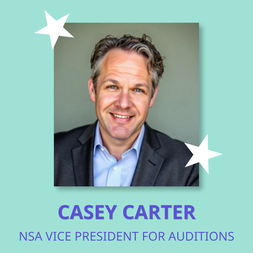
Casey Carter - NSA Vice President for Auditions –
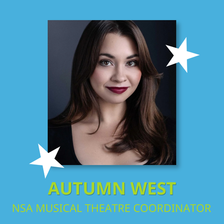
Autumn West - NSA Musical Theatre Coordinator -
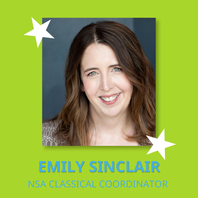
Emily Sinclair - NSA Classical Coordinator -
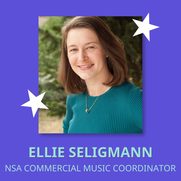
Ellie Seligmann - NSA Commercial Music Coordinator -
Scope and Scale
The 2025–2026 NATS National Student Auditions (NSA) season concluded on July 5, 2026, in San Antonio, Texas, along the way engaging thousands of young singers at every level (Chapters and Regions) of the NATS audition process. The 2025-2026 season participation included:
~ 16,862 students participating in Chapter and Regional auditions from September 2025 through March 2026
~ 982 students participating in the National Preliminary Online Auditions in April 2026
~ 403 students participating in the National Semifinals in San Antonio in early July 2026 (normally in June)
~ 96 students declared as Finalists - earning first-, second-, or third-place recognition across 34 categories
Six of this year’s Finalists placed in two different categories. The final rounds were held in conjunction with the 59th NATS National Conference in San Antonio. In even years, NSA happens in conjunction with the NATS National Conference. In odd years, there is no National Conference and thus the NSA happens as a stand-alone in-person event.
The San Antonio experience extended beyond the auditions themselves. Many students and families attended the NSA Generations Breakfast, celebrating the growing community of current and former NSA participants and creating connections that can continue long after the auditions conclude. Students also had the opportunity to meet representatives from colleges and universities participating in AuditionCon, explore educational opportunities, and learn more about potential next steps in their vocal journeys.
NATS congratulates all of this year’s Finalists and participants and extends its appreciation to the more than 200 adjudicators who served during the online National Preliminary Auditions and the in-person Semifinal and Final rounds, along with the 16 collaborative pianists who supported singers onsite in San Antonio. We also thank the parents, teachers, volunteers, and supporters whose encouragement, time, and commitment helped make the 2025–26 National Student Auditions possible.
2026 NSA Semifinalists Program
History of the Program
National guidelines for Student Auditions (SA) were first conceived in 1977. Following a national survey of chapters and regions, a committee chaired by Judith Nicosia Civitano developed the 1993 Guidelines for Student Auditions, which served NATS for the next sixteen years. A 2007 survey of chapter and regional policies led to further revisions by a committee including Kathleen Arecchi, Elaine Case, Roma Prindle, Connie Roberts, and Anne Christopherson. Their work established a mission statement for Student Auditions, clarified responsibilities for organizers, and identified best practices.
In 2010–2011, a committee chaired by Norman Spivey explored creating a national audition system that would allow singers to advance from a region to the national student auditions. Building on this work, a committee chaired by Deborah Williamson developed the National Student Auditions (NSA) Guidelines, which were approved by the NATS Board of Directors in 2012.
From 2012–2014, the NSA structure, categories, repertoire requirements, and fees were finalized and published online. The NATS Board approved the launch of National Student Auditions in 2013, and the inaugural national semifinals and finals were held in Boston during the 2014 NATS National Conference. More than 150 singers participated, 37 advanced to the finals, and 24 singers shared $30,000 in awards.
In 2014, Dan Johnson-Wilmot and committee members Karen Brunssen, Mark McQuade, Robert Wells, and Melanie Williams developed a national model for Student Auditions based on NSA Guidelines. The model established greater consistency across chapters and regions while creating a pathway for singers to progress from local auditions to national audition. Today, more than 16,000 NSA auditions are heard annually.
In 2022, the NATS Executive Board expanded NSA opportunities by adding 16 new categories, including Commercial Music divisions and additional Classical, Musical Theatre, and Commercial Music categories for children and youth. Introduced during the 2023–2024 audition cycle, these additions increased the annual NSA offerings to 34 categories, in addition to the biennial American Negro Spirituals categories and the alternating Hall Johnson Spirituals Competition.
National Student Audition Regulations continue to be reviewed and revised regularly by the NSA Regulations Committee with input from NSA Auditions Chairs and NATS members.